

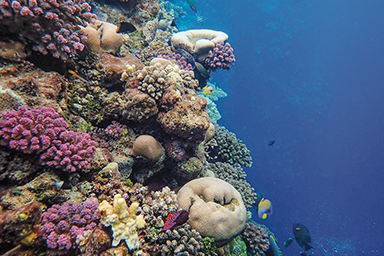
Dear EarthTalk: Is it true that coral reefs are moving toward the poles due to the warming oceans? Can they outrun climate change’s damaging effects? ~ Mike T., Seattle, WA
Greenhouse gas emissions around the globe are driving tropical ocean temperatures to historic highs. As a result, coral reefs are attempting to migrate toward cooler, higher-latitude waters. This shift has sparked widespread debate over whether these vital ecosystems can naturally outrun the devastating impacts of climate change. Marine organisms are indeed expanding their geographic ranges, but recent scientific modeling reveals that adaptation speeds cannot keep pace with the sheer velocity of modern environmental degradation.
The biological urge for marine life to track cooler temperatures is well-documented. As Dr. Noam Vogt-Vincent, a National Oceanic and Atmospheric Administration (NOAA) climate and global change postdoctoral fellow at the Hawaiʻi Institute of Marine Biology (HIMB) Marine Ecological Theory Lab, explains regarding historical shifts: “As the ocean warms, species tend to move poleward… We know from the fossil record that coral reefs have previously expanded their ranges in response to past climate change, but we didn’t know whether this was a matter of decades or millennia.”
To test whether this migration can outrun current warming trends, researchers turned to advanced predictive modeling. Using high-powered simulations on the University of Hawaiʻi’s Koa supercomputer, a recent multi-institution study evaluated how global coral networks will respond over time. Dr. Lisa McManus, a HIMB assistant research professor and co-author of the study, noted the scope of the project: “By modeling coral reefs globally and incorporating evolution and connectivity, this study provides an unprecedented long-term view of how these complex ecosystems will respond to climate change.”
The supercomputer simulations delivered a sobering reality check. While coral larvae can drift poleward via ocean currents, the pace is far too slow to offset the mass destruction happening in equatorial zones. Furthermore, high-latitude environments present unexpected secondary barriers. Cooler waters often feature higher ocean acidification rates and a lack of established, interdependent species networks, meaning that arriving corals face severe survival hurdles even if temperatures are temporarily favorable.
Corals do possess some natural resilience mechanisms, including waterborne larval dispersal and shifts in symbiotic microalgae ratios to gain temporary heat tolerance. However, these evolutionary adjustments happen incrementally, whereas thermal stress events like widespread bleaching occur with abrupt, catastrophic frequency. This widening gap between slow adaptation and rapid environmental decline leaves many reefs vulnerable to collapse before they can evolve. So, relying solely on natural migration or localized survival shifts provides a false sense of security for the future of these marine habitats.
Ultimately, scientists emphasize that corals cannot simply outrun climate change. While new, small patches of high-latitude coral will likely establish over time, safeguarding the vast majority of the world’s reef ecosystems relies entirely on ambitious, immediate reductions in global greenhouse gas emissions.
MORE INFORMATION: https://oceanservice.noaa.gov/ocean/corals/; himb.marine.hawaii.edu; https://impact.earthdata.nasa.gov/casei/campaign/CORAL/.
♦ ♦ ♦ ♦ ♦ ♦ ♦ ♦ ♦ ♦ ♦ ♦
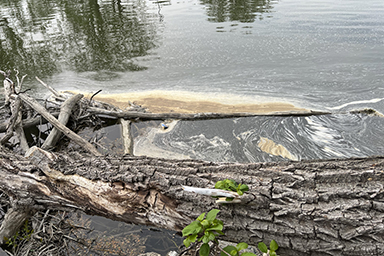
Dear EarthTalk: What’s new in the fight to get PFAS out of our drinking water and bloodstreams? ~ Michelle K., Reno, NV
PFAS, or Polyfluoroalkyl substances, are chemicals that are resistant to breaking down, or “forever chemicals.” Having both commercial and industrial applications, they have been pervasive in the environment since the late 1930s. They can have devastating health impacts for both humans, animals and the Earth’s ecology as a whole.
The historical work against PFAS has served as the base of current legislation. Most regulation was initially patchy and separate among agencies and states. This meant some mandatory data reporting from producers and limits or even penalties, but no wide-sweeping bans. Finally, in the early 2020s, PFAS regulation was consolidated in the U.S. when the U.S, Environmental Protection Agency (EPA) set the first standardized drinking water limits and required data reporting.
Despite this progress, there is some backsliding currently occurring. In a 2025 article for the Environmental Health Network (ENH), Mark Ruffalo, actor and activist, stated that his film, “Dark Waters” depicting the lawsuit against DuPont regarding PFAS pollution, “was meant to be a cautionary tale; instead, it has become the future we keep choosing.”
The backsliding has been characterized by governmental back-and-forth, between the diminishing enforcement powers of the EPA and scientists’ and environmental advocates’ desire for action. The EPA attempted to pull back some of its standardized regulation against certain forever chemicals by repealing some specific drinking water limits.
State governments have continued to take action on PFAS, advancing legislation on consumer goods. Specifically noting the slow federal action, the states have taken the lead several items, including high human-exposure items, like “cookware, cosmetics, cleaning products, dental floss, and food packaging.”
At the same time, there are some research and development efforts to mitigate PFAS through a variety of methods, including testing kits, various methods of elimination through biochemical processes, and even the advancement of specific water filtration techniques (CPI). To avoid PFAS, consume filtered water, and avoid non-stick pans, fast-food packaging, and even some clothing blends. With a little bit of research about materials encountered day-to-day, avoiding PFAS can be a breeze. Together, with research, legislation, and mindfulness, PFAS as an issue can be permanently mitigated.
MORE INFORMATION: ehn.org/mark-ruffalo-toxic-pfas-pollution-continues-to-threaten-communities-across-the-u-s.
♦ ♦ ♦ ♦ ♦ ♦ ♦ ♦ ♦ ♦ ♦ ♦

Dear EarthTalk: How is India making use of decentralized water technologies to cope with the country’s shrinking access to freshwater and what can we learn from them? ~ Name withheld
India faces an intense environmental challenge, with roughly 600 million people experiencing high to extreme water stress. For decades, the traditional response centered on massive, centralized infrastructure projects like giant dams and transmission pipelines. While important, these large projects are expensive, slow to build, and often fail to reach vulnerable communities. Meanwhile, groundwater is being pumped out much faster than rain can refill it.
To bridge these gaps, decentralized water technology is gaining ground by focusing on capturing, treating and managing water locally. The most immediate solution is modern rainwater harvesting. In urban centers like Bengaluru and Chennai, local laws require new buildings to install rooftop harvesting systems. Today, these are paired with Internet-of-Things (IoT) monitors. These smart devices track water levels and quality in real time, alerting leaders via smartphone apps when filters need maintenance.
The most immediate and affordable decentralized solution is modern rainwater harvesting. While collecting rain is an ancient practice, new technology has made it far more efficient. In major urban centers like Bengaluru and Chennai, local laws now require new buildings to install rooftop rainwater harvesting systems.
On a larger scale, communities use digital mapping to build small check dams and percolation pits across fields. These structures slow down rushing monsoon rainwater, giving it time to naturally refill underground aquifers. Communities are also changing how wastewater is treated by utilizing engineered wetlands and bio-filtration systems right inside neighborhoods. They use specific plants, sand and natural bacteria to clean greywater without harsh chemicals, allowing it to be safely reused to water crops or flush toilets.
In response, agencies are introducing stricter rules to limit Reverse Osmosis (RO) purifiers and encourage low-cost, solar-powered disinfection units that kill bacteria in local wells without wasting a single drop. In response, agencies are introducing stricter rules to limit RO use and encourage low-cost, solar-powered disinfection units that kill bacteria in local wells without wasting a single drop. According to Sunita Narain of the Centre for Science and Environment, true water security relies on putting decentralized management technologies directly into the hands of local communities. This shift also requires addressing “bad tech” habits. For years, households relied on home RO purifiers, which can waste up to 75 percent of the water that enters the machine.
Everyday people can change how they use water by setting up gutters and storage tanks to catch rain, which significantly lowers municipal bills. Citizens can also join grassroots groups to clean up polluted local lakes, transforming neglected areas back into vibrant water basins.
MORE INFORMATION: www.jalshakti-dowr.gov.in; www.cseindia.org; www.wateraid.org/in
♦ ♦ ♦ ♦ ♦ ♦ ♦ ♦ ♦ ♦ ♦ ♦
EarthTalk® is produced by Roddy Scheer & Doug Moss for the 501(c)3 nonprofit EarthTalk. See more at https://emagazine.com. To donate, visit https://earthtalk.org. Send questions to: question@earthtalk.org.