

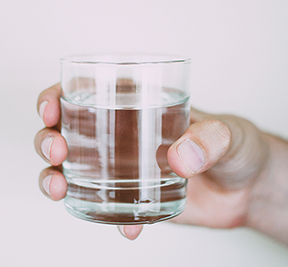
Dear EarthTalk: What are some innovative ways researchers are removing microplastics from drinking water? ~ Bill J., Chicago, IL
As concern over microplastics grows, so do efforts to avoid consuming them. Drinking water is a primary entry point for microplastic accumulation in our bodies. While we trust municipal waste water treatment plants to remove countless other contaminants, their ability to remove these plastics varies. A study by Ohio State University, led by Dr. John Lenhart and Megan Jamison, found that two-thirds of microplastics in raw and treated samples were smaller than one micrometer. Jamison noted, “We’re seeing a much higher concentration of plastics in terms of particle count because we’re seeing a lot of those nanoplastics that have been unreported in other studies.”
Given the uncertainties around current waste water treatment’s efficacy for microplastics, scientists are developing novel removal methods. One approach uses polymers originating from okra pods and fenugreek seeds, which stick to microplastics, clumping them together for easier removal. This also presents a safer, biodegradable alternative to the current use of synthetic wastewater treatment polymers.
Researchers at the University of Missouri have engineered a strain of algae that produces limonene, the oil best known for giving oranges their scent. It alters the algae’s surface, making it water repellent. When introduced to contaminated water, microplastics, which are also water repellent, adhere to the algae and can be removed. The creator of this algae, Susie Dai, aims to use this method to not only clean water, but also recycle the microplastics collected into safer, bioplastic materials. Elsewhere, Princeton Engineering has discovered a way to us egg protein to create an aerogel capable of removing microplastics with 99 percent efficiency. While scaling this aerogel is a challenge, Sehmus Ozden, a postdoctoral research associate, emphasizes the product’s potential. “Activated carbon is one of the cheapest materials used for water purification,” she says. “We compared our results with activated carbon, and it’s much better.”
While awaiting these innovations, there are ways to reduce microplastic consumption. Boiling water before filtering it creates limescale, which traps microplastics that at-home filters can easily remove. This works best with hard water, but even with soft tap water, boiling can remove about 25 percent of microplastics. Also, avoiding bottled water is an easy way to reduce your microplastic intake, as it is linked to higher microplastic concentrations than tap water. Finally, addressing the source of pollution is essential to the success of the global fight against microplastics. Microfibers from polyester clothing are a significant contributor to water contamination. Switching to natural fabric alternatives can reduce the microplastics entering our waterways in tandem with efforts to filter them from our drinking supply.
MORE INFORMATION: sciencedaily.com/releases/2026/05/260511213201.htm.
♦ ♦ ♦ ♦ ♦ ♦ ♦ ♦ ♦ ♦ ♦ ♦
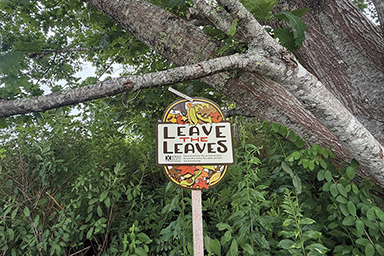
Dear EarthTalk: What is the Xerces Society’s “Leave the Leaves” campaign all about and how many sites participate? ~ Randy J., Newark, NJ
The Xerces Society’s “Leave the Leaves” campaign asks homeowners, grounds crews, municipalities and campuses to rethink the annual ritual of removing every fallen leaf and dead plant stem. What looks like untidy yard debris can be essential winter habitat for insects and other invertebrates.
Many butterflies, moths and bees overwinter close to where they spent the growing season. Fritillary and woolly bear caterpillars shelter in leaf litter; luna moths and swallowtails disguise cocoons or chrysalises as dead leaves; and mated bumble bee queens burrow only an inch or two into soil, where leaves provide insulation. About 30 percent of native bees nest in tunnels and may use hollow stems, dead wood or brush piles.
The advice is not to abandon every lawn. Xerces recommends leaving leaves where practical or raking them intact into garden beds, beneath trees or into designated piles. Leaves can suppress weeds, retain moisture and return nutrients as they decompose. The group discourages shredding because mowers can destroy insects, eggs and cocoons inside the leaves, and recommends delaying spring cleanup until overwintering wildlife has emerged.
“It not only needs leaves, it looks like a leaf,” says Xerces pollinator ecologist Ray Moranz of the goatweed leafwing butterfly, whose camouflage depends on leaf litter.
How many sites participate is harder to answer than the slogan suggests. Leave the Leaves is an open public-education effort promoted through social media, yard signs and downloadable materials; Xerces publishes no registration total for every household, park or institution following it. Its Bee City USA and Bee Campus USA network is the campaign’s most identifiable distribution system. The latest completed public tally lists 426 affiliates at the end of 2024—224 cities and 202 campuses—but that figure represents affiliates able to use the campaign kit, not proof that every one ran a Leave the Leaves activity. The 2025 affiliate report is scheduled for September 2026.
Real-world adopters demonstrate the idea’s flexibility. UC Davis encouraged residents to preserve leaf litter through its Bee Campus USA affiliation. Greensboro, North Carolina, launched a pledge program offering Leave the Leaves yard signs to residents and businesses. Raleigh advises residents to rake leaves into beds, create a decomposition pile or leave them where they fall, while keeping heavy layers off turf and storm drains.
Readers can participate by preserving whole leaves in low-traffic garden areas, retaining some hollow stems and brush, keeping streets and drains clear, and explaining the intentionally wildlife-friendly landscape to neighbors.
MORE INFORMATION: https://xerces.org/leave-the-leaves; https://beecityusa.org/leave-the-leaves-promo-kit-for-affiliates/.
♦ ♦ ♦ ♦ ♦ ♦ ♦ ♦ ♦ ♦ ♦ ♦
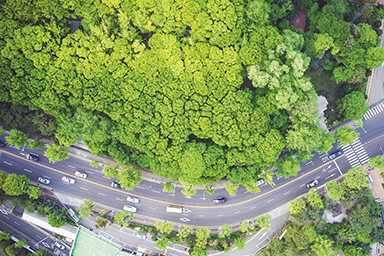
Dear EarthTalk: What’s new in terms of making the construction and maintenance of roads and highways more efficient and greener? ~ Wendy Streeter, Exeter, NH
Highways are changing as engineers look for ways to make roads last longer while reducing pollution. Instead of relying only on carbon-heavy paving methods and fixing potholes after they appear, many road agencies are using recycled materials, smarter technology, and artificial intelligence (AI). These new ideas help roads better handle extreme weather while cutting waste and lowering construction costs.
One of the biggest changes is the use of recycled materials. TechniSoil Industrial has developed its “Neo” paving system, which mixes recycled plastic into road construction. The company says the process can reduce greenhouse gas emissions by up to 90% while using about 150,000 recycled plastic water bottles for every lane mile of roadway. Rather than sending plastic to landfills, it becomes part of a stronger road surface.
Old tires are also finding a new purpose. Along Interstate 85 in Georgia, The Ray serves as an 18-mile “living laboratory” where new transportation technologies are tested, including Rubber Modified Asphalt (RMA), which uses crumb rubber made from discarded tires. Texas Materials has also created its Super Sand Mix, replacing more than 42% of traditional asphalt binder with recycled tires and roofing shingles. These roads are more resistant to cracking, provide better traction, and even reduce traffic noise. As Allie Kelly, Executive Director of The Ray, explained in CNN’s report on the project, “We see waste as a resource.”
Scientists are also improving the pavement itself. Some new asphalt contains tiny capsules filled with bio-based oils that automatically seal small cracks before they grow. Other roads use embedded steel fibers that can be heated with magnetic induction to extend pavement life up to three times longer. Porous asphalt and permeable concrete allow as much as 80% of rainwater to pass through the surface, reducing flooding, preventing hydroplaning, and helping replenish groundwater.
Technology is making road maintenance smarter as well. Intelligent Compaction rollers use GPS and onboard sensors to ensure pavement reaches the correct density during construction. Embedded sensors continue monitoring concrete long after it is poured, while AI-powered cameras and automated repair machines can detect and fix small cracks before they become costly potholes. New temperature-sensitive paint and glow-in-the-dark lane markings can also improve driver safety during icy conditions.
Looking toward the future, government agencies are also beginning to integrate renewable energy directly into the transportation grid. Solar panels and piezoelectric energy harvesters are being installed along highway shoulders and beneath surfaces to capture clean electricity from passing vehicular traffic and sunlight. As Sean Weaver, founder and CEO of TechniSoil Industrial, noted when discussing modern eco-friendly paving methods, “I’m captivated by the idea that roads are one of the first downstream applications for recycled plastic that is bigger than the size of the plastic problem itself.”
MORE INFORMATION: www.technisoil.com; www.theray.org; www.ncat.us.
♦ ♦ ♦ ♦ ♦ ♦ ♦ ♦ ♦ ♦ ♦ ♦
EarthTalk® is produced by Roddy Scheer & Doug Moss for the 501(c)3 nonprofit EarthTalk. See more at https://emagazine.com. To donate, visit https://earthtalk.org. Send questions to: question@earthtalk.org.