

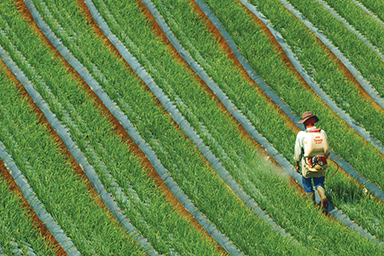
Dear EarthTalk: What can we do to get away from hazardous agricultural fertilizers and pesticides? ~ Mark Winston, New York, NY
Hazardous agricultural fertilizers and pesticides have had a long history. A previously commonplace and insidious pesticide, Dichlorodiphenyltrichloroethane, or DDT, was determined to be an ecosystem and human life disruptor. These scientific findings, supported by public outcry through the tireless work of individuals like Rachel Carson (author of Silent Spring), resulted in 1972 legislation that still exists today. However, other hazardous agricultural chemicals, like Paraquat and Phorat have yet to be fully regulated, leaving gaps within the move away from these harmful pesticides and fertilizers.
Regulation doesn’t necessarily mean removal of a chemical. Fifty years after DDT’s banning in the U.S. and global efforts to move away from it in select anti-malaria uses, concern from historical use still remains. Effects persist for decades after the last wide-scale use—making regulation as urgent as can be.
In regulating hazardous fertilizers and pesticides, understanding the importance of agriculture is key. Agriculture has long served as the basis for the global economy, providing products that are vital to human life as well as employment. Fertilizers and pesticides are undoubtedly harmful, but they are often essential to farming operations to meet demand. Recognizing the environmental effects presented by the use of these chemicals, many farmers have moved to sustainable practices, making eco-friendly switches within their farming operations.
Dr. Jose Ramirez, an expert in entomology expounded upon the viability of eco-friendly alternatives to agricultural chemicals: “Microbial pesticides and parasitic insects offer an environmentally-friendly alternative with the potential to alleviate huge economic losses to U.S. agriculture and benefit public health.” With these scientific advances, the global community has been able to continue its crack-down on hazardous agricultural chemicals without severely impeding agricultural production. Though most regulation is “patchwork,” meaning that it varies from country to country, governing bodies in most nations have taken charge in regulating the most harmful substances previously used.
Looking ahead, the best way to move away from these fertilizers and pesticides is through innovation and regulation. By empowering scientific efforts to find sustainable yet equally if not more effective alternatives, the agricultural community can remain strong and eco-friendly. Regulation can be supported through similar outreach and advocacy efforts, encouraging stronger limits and rules about hazardous chemicals, specifically based on what science dictates to be safe.
MORE INFORMATION: panna.org/news/phasing-out-the-most-dangerous-pesticides-becomes-a-global-commitment/.
♦ ♦ ♦ ♦ ♦ ♦ ♦ ♦ ♦ ♦ ♦ ♦
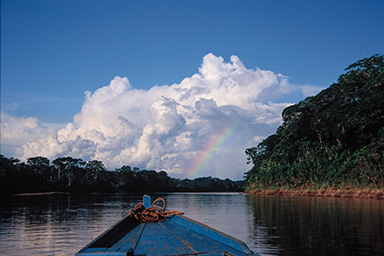
Dear EarthTalk: How are conservationists encouraging reforestation in the Amazon? ~ Peter Smyth, Tempe, AZ
The Amazon Rainforest covers eight million kilometers of land and spans nine countries across South America, making it the world’s largest rainforest. The Amazon is home to 400 billion trees, contributing greatly to global carbon storage and climate regulation. In addition, 10 percent of the Earth’s known species live in the Amazon, which also provides essential food and medicine to nearby communities. Despite such overwhelming benefits, the Amazon is gradually becoming barren land. According to Global Citizen, a leading international advocacy organization, 20 percent of the rainforest has been lost to mining, forest fires, agricultural expansion, land grabbing, and cattle ranching in the past 50 years.
Indigenous communities have taken on initiatives to reforest and preserve the Amazon. Farmers have integrated agroforestry systems, a method of sustainable farming that preserves biodiversity. Local-led ecotourism is another way communities have worked to protect the Amazon’s acreage. Sani Warmi, a Kichwa indigenous women’s organization in Sani Isla, Ecuador, operates the Sani Lodge and leads traditional cooking and craft lessons for tourists, protecting 76,600 forest acres. And the U.S.-based Alliance for a Sustainable Amazon works with locals in Peru to re-plant native land species.
Others, like Brazilian parachutist Luigi Cani, have made it their mission to revitalize barren parts of the Amazon. In 2022, Cani completed his “100 Million Seeds Amazon Project” by skydiving while scattering seeds across parts of the Amazon. “… the seeds were released precisely where we wanted them to be,” he says. “We need huge changes to make the world better than it is today. The possibility for growth is incredible, but more people need to be willing to learn and work together.” The seeds germinated at a rate of 95 percent, making the project a successful and eye-catching demonstration of individual activism.
There are also larger global strategies protecting the Amazon. The Brazilian government launched the Amazon Fund, which has raised over $1.4 billion dollars from contributing countries across the world. And experts are improving technology to monitor deforestation. The Colombian Amazon is being observed by an AI-powered satellite and drones to prevent illegal deforestation.
Readers interested in helping to reforest the Amazon, you can support Amazon Rainforest preservation organizations such as the Alliance for a Sustainable Amazon by donating on their website.
MORE INFORMATION: globalcitizen.org/en/content/6-solutions-to-restore-the-amazon-rainforest/.
♦ ♦ ♦ ♦ ♦ ♦ ♦ ♦ ♦ ♦ ♦ ♦
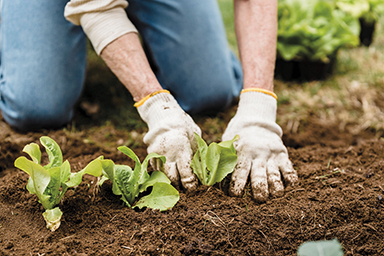
Dear EarthTalk: With rising food costs and climate concerns, many suburban and urban residents want to grow their own food, but face strict local zoning laws or HOA rules. What is the “Right to Garden” movement, and how are states addressing these legal barriers? ~ L.J., via email
As global food prices fluctuate, residential cultivation has transitioned from a leisurely hobby to a vital tool for home food security. But citizens often encounter restrictive webs of zoning laws and Homeowners Association (HOA) regulations that penalize residents for replacing traditional turf grass with edible crops or native pollinator plants. To counter this, a growing “Right to Garden” movement is pushing for state-level preemption laws to establish ground-level food cultivation as a protected property right, overriding localized aesthetic bans while leaving municipal safety authority intact.
Florida and Illinois have already successfully codified these protections. Policy research highlights that residential gardens function as essential green infrastructure, absorbing significantly more stormwater runoff than standard shallow-rooted lawns. Currently, arbitrary town ordinances present massive barriers. In Linden and Roselle Park, New Jersey, strict height limits on “all plant life” effectively outlaw basic vegetable stalks, forcing families to choose between legal fines and self-sufficiency.
The economic and ecological data reveal a desperate need for solutions. Traditional shallow-rooted turf grass lawns account for millions of gallons of wasted municipal water and chemical runoff. At the same time, regions like New Jersey face a staggering $53 million food budget shortfall, leaving over 650,000 residents food insecure. Legalizing backyard gardening reclaims this non-productive acreage, introducing decentralized agricultural nodes that immediately ease municipal supply pressures.
To transform this concept into a statewide reality, initiatives are underway to work alongside lawmakers like New Jersey State Assemblyman Gerry Scharfenberger to introduce the Right to Garden Act into committee. The Right to Garden Act solves local restriction barriers by standardizing agricultural rules statewide. This protects a homeowner’s baseline liberties while allowing green spaces to safely absorb 30 percent more stormwater than standard grass, saving towns thousands in infrastructure repairs.
Crafting effective legislation requires balancing resident freedoms with public safety standards. Assemblyman Scharfenberger explained in a legislative press briefing, “Zoning and land-use concerns usually center on potential negative impacts on neighboring properties, such as water runoff, fertilizer odors, or structural setbacks.” To help change the legal landscape permanently, citizens can take quick action by contacting their local representatives to demand standard, statewide protections. Also, getting involved with established local support networks like SNAP, WIC, or community garden associations can help identify exactly where regional food and environmental deficiencies can be solved right now.
MORE INFORMATION: njleg.state.nj.us; www.npsnj.org.
♦ ♦ ♦ ♦ ♦ ♦ ♦ ♦ ♦ ♦ ♦ ♦
EarthTalk® is produced by Roddy Scheer & Doug Moss for the 501(c)3 nonprofit EarthTalk. See more at https://emagazine.com. To donate, visit https://earthtalk.org. Send questions to: question@earthtalk.org.