

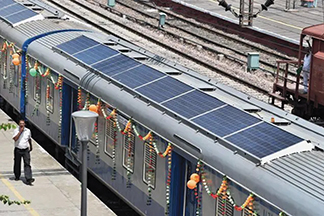
Dear EarthTalk: Is anybody working on solar-powered trains, and if so, when will they be ready for prime time? ~ Paul Best, Los Angeles, CA
Solar-powered trains run on the Sun’s energy to operate, via solar panels placed on train stations, on the roofs of trains, or most commonly, from the rail tracks. They also often gain indirect energy from the sun, using electricity from solar farms that is sometimes stored in batteries to facilitate auxiliary functions other than propulsion, including lighting, ventilation and GPS systems. Most solar train travel as of 2026 has been for short distances, optimal for tourism and urban shuttles, like the Byron Bay Train in Australia.
However, there are significant plans to achieve long-term solar train travel across the world. Unlike traditional diesel-powered trains, solar-powered trains are highly sustainable and offer an improved climate future because they rely on clean and renewable energy. Like other renewable energy sources, solar power improves the environment because it decreases environmental tensions and pollutants that arise with the use of fossil fuels.
In 2019, the International Earth Agency predicted that the global rail network could expand to almost 2.1 million kilometers by 2050. In 2024, Argentina unveiled its first solar-powered tourist train with a range of about 41 kilometers. Since introducing their first solar-powered train in 2017, India has also joined the effort. Indian Railways plans to develop 20 gigawatts of solar energy in vacant lands by 2030. The U.K. and Switzerland have also made efforts to introduce solar energy in train travel.
In 2017, Alice Bell, co-director at the U.K. climate change group Possible, wrote in The Guardian, “We think solar could power 20 percent of the Merseyrail network in Liverpool, as well as 15 percent of commuter routes in Kent, Sussex and Wessex…trains and trams all over the world could be running on sun in a few years’ time.” Approved in 2008, California’s solar-powered high-speed train will run approximately 1287.5 kilometers and is the first of its kind across the world. This train is set to be completed in 2030 and hopes to connect to cities like Vancouver, San Diego and Los Angeles.
While solar-powered train projects are promising, they still face financial, operational and timing challenges. Many have to do with train maintenance and durability, which can impact the safety of train operations. Nevertheless, solar trains could completely shift the current state of climate-conscious transportation.
MORE INFORMATION: ratedpower.com/blog/photovoltaic-rail-transportation/; forbes.com/sites/alanohnsman/2023/06/12/californias-100-billion-electric-bullet-train-will-be-fully-solar-powered/.
♦ ♦ ♦ ♦ ♦ ♦ ♦ ♦ ♦ ♦ ♦ ♦
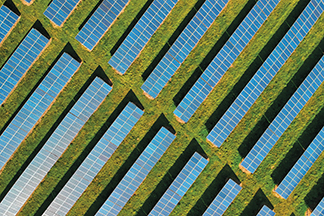
Dear EarthTalk: What are agrivoltaics, and why are environmental advocates so bullish on it? ~ Pat Billings, Butte, MT
Agriculture requires large amounts of resources, especially water and energy. Almost a third of global greenhouse gases are linked to agriculture. As world population grows, the demand for food and agricultural production only increases. That’s where agrivoltaics come in, utilizing land for both solar installation and agricultural production, fostering a symbiotic bond between agriculture and energy.
Agriovoltaics allows for more efficient land use while also protecting agricultural yields. Solar panels protect plants from intense weather conditions and prevent them from exceeding their light saturation point, while plants help keep solar panels cool. The protection of plants also protects economies that rely on agriculture. At the same time, solar energy can power essential agricultural needs like equipment. The excess energy produced in agrivoltaics is stored in battery banks or transmitted to the grid for other users.
Agrivoltaics represents the epitome of sustainable agriculture and climate resilience because of its ability to address various concerns. It also provides a renewable energy system that directly limits greenhouse gases by reducing reliance on fossil fuels, thus mitigating the carbon footprint involved in agriculture. Agrivoltaics also promotes water conservation by ensuring that plants are not oversaturated with sunlight.
Chad Higgins, an environmental engineer at Oregon State University, told Reuters in 2023 that agrivoltaics nullifies the choice between energy and farm production. “The solar versus ag debate is a non-starter…They’re [solar panels] like any other electronic device, they become more efficient as they become cooler, so it can be a truly symbiotic relationship.”
Challenges still exist, especially cost. The high start-up expenses and the difficulty in having farmworkers adapt to new systems are obstacles that reinforce the importance of realism. Still, the many advantages of agrivoltaics are a reason for optimism. According to Colorado State University, utilizing agrivoltaics for land systems can potentially increase farm productivity from 35 to 73 percent. Through prioritizing sustainability and energy efficiency, agrivoltaics embody a win-win situation.
Agrivoltaics is only becoming more popular. According to the U.S. Department of Energy, solar energy could jump from providing 4 percent of the U.S. electrical supply to 40 percent by 2035. Moreover, policy across the United States from Colorado to New York is working to increase awareness, research, and usage of agrivoltaics systems, amplifying it as the future of sustainable agriculture.
MORE INFORMATION: sciencedirect.com/science/article/pii/S1364032124002387.
♦ ♦ ♦ ♦ ♦ ♦ ♦ ♦ ♦ ♦ ♦ ♦
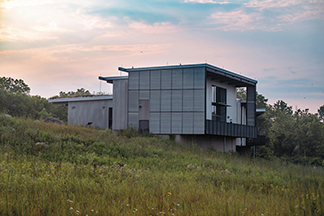
Dear EarthTalk: What is a “net-zero” home? Does it have to be new construction or can I retrofit an older home to be “net-zero”? ~ Peter B., Boulder, CO
As the impact of climate change becomes more severe, homeowners are adopting sustainable practices in order to reduce their carbon footprint. One method getting much attention is the “net-zero” home. A net-zero home is designed or upgraded to generate as much energy as it consumes over the year. With time, net-zero homes are becoming more readily available in the US, Canada and Europe. “The zero-energy trend is irreversible,” say the Zero Energy Project, accounting for 28,000 net-zero homes in North America. Key benefits include reduced greenhouse gas emissions, lowered energy bills, and much more.
Primary features of a net-zero home include insulation to prevent heat loss, energy-efficient models of domestic appliances, airtight construction and renewable energy systems such as solar panels. A common misconception is that net-zero energy can only be achieved by new construction, but many homes can be retrofitted to reach or approach net-zero. Transforming existing homes to net-zero can be achieved through a framework of steps, typically beginning with assessing current energy efficiency. From there, homeowners can incrementally invest in improving insulation, upgrading to energy-efficient equipment, optimizing ventilation systems, and lastly, switching to renewable energy sources. This approach ensures that the energy demand is lowered before using clean energy, making the process efficient and effective.
Retrofitting has many advantages besides being eco-friendly. There are economic benefits, including increased home value. However, retrofitting can pose its own drawbacks: Older homes may be subject to design limitations that hinder full energy optimization, and most important, it can be quite costly. However, government support through tax credits, rebates and low-interest loans can help cover the upfront costs of net-zero upgrades. According to the U.S. Department of Energy, “You can benefit from energy-efficient financing whether you’re buying, selling, refinancing or remodeling a home.”
On the other hand, new construction offers a blank slate. Builders have complete control over design, materials and technology. New net-zero homes are also built in compliance with current regulations. As a result of these benefits, they often meet true net-zero goals. However, the high upfront costs and a smaller pool of new homeowners make this option less feasible. In comparison to new construction, retrofitting is a more sustainable, time and cost-friendly approach. Ultimately, the goal is not perfection, but rather progress towards a clean and healthy environment. Hence, even if achieving full net-zero is not possible, making considerable strides towards greater energy efficiency is a step in the right direction.
MORE INFORMATION: zeroenergyproject.com/sell/zero-energy-homes-future-available-today/; zeroenergyproject.com/renovate/zero-energy-retrofits-builders/
♦ ♦ ♦ ♦ ♦ ♦ ♦ ♦ ♦ ♦ ♦ ♦
EarthTalk® is produced by Roddy Scheer & Doug Moss for the 501(c)3 nonprofit EarthTalk. See more at https://emagazine.com. To donate, visit https://earthtalk.org. Send questions to: question@earthtalk.org.