
Animal House
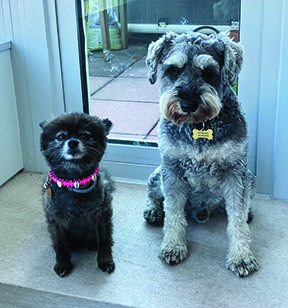 Raise your hand if you have seen (or traveled with) a therapy dog or emotional support animal on a plane? If you are a pet owner, are you familiar with treats as positive reinforcement, separation anxiety and PTSD in pets that have had a traumatic past? We apply these observations in pets as we do people, but somehow it is easier when we are not talking about ourselves. Or are we?
While we dislike being compared to dogs, we too respond to positive re-enforcement over punishment. When our dog performs a trick, listens to instructions or completes a task, there is a reward. We forget that in humans interactions and often have it backwards. We are punished for speeding, being late, forgetting something instead of praised and reinforced when when we do the opposite and get it right.
There is an additional ease in speaking about a dog’s mental health, and we are acutely aware of behaviors they employ to calm themselves down or to act out. Is this projection of our own personalities onto our dogs, or is there is accuracy in what we see? We know that being pet owners improves our mental health, and we try to be even better at interpreting the mental health of our pets.
Humans do however anthropomorphize pets, treating our animals like humans with the same emotions and behaviors to explain what we see. Ironically, people that tend to feel more guilt in general are likely to interpret behaviors in dogs as anxious and lonely more often that by humans that are not feeling perpetually guilty. So, while we speak freely about our animals, is it us projecting our own feelings, processing our own behaviors through pets? Or can we clearly see that they are signaling? Maybe both. Most of all, having a pet and a pet having a loving home are positive for everyone, deserving some reinforcement.