
by Evelyn J. Mocbeichel

Now with our country’s celebrating its 250th birthday soon, more American flags are being displayed both in a regular flag hanging on a pole or banner, but also on clothing and home décor. This year’s July 4th celebration will most likely be an over-the-top event with even the smallest of locale’s putting together a town parade or firework display. The Montauk Community has always celebrated July 4th with exciting firework displays that are enjoyed by both town residents and tourists coming to enjoy our area. It is a happy time as The Flag of the United States, the “Living Symbol of our Great Republic” and should be treated with dignity and respect as stated in a publication printed by The American Legion. It is acceptable to display the flag year found, but certain days have been designated for particular attention regarding honoring our military personnel. Most common ones are Flag Day in June, Independence Day (July 4th) Memorial Day, and Veteran’s Day. With any of these displays, there are accepted practices for caring for handling the American Flag. How many of us know, or remember from our elementary school days, what is the proper way to display and treat “Old Glory”, as it is nicknamed? Private homeowners and businesses should take notice of these rules for the utmost respect of flag flying.
On Flag Day, June 14, 1923, representatives of over 68 organizations met in Washington for a conference, called by, and conducted under the auspices of the National Americanism Commission of The American Legion. The purpose of this conference was to draft an authentic code of flag etiquette. The code drafted by that conference was printed by the national organization of The American Legion and given nation-wide distribution. Millions of copies have been placed in the hands of interested citizens since 1923-4. The 77th Congress of the United States (Second Session) passed Public Law 623, which is a codification of the Flag Code. This law was later amended, and the Flag Code has now been changed to comply with the law. Since the original Flag Conferences, the code has been adopted for use by 45 other organizations. American Legion Posts should bring the rules and diagrams contained in this revised edition of the code to the attention of schools and citizens.
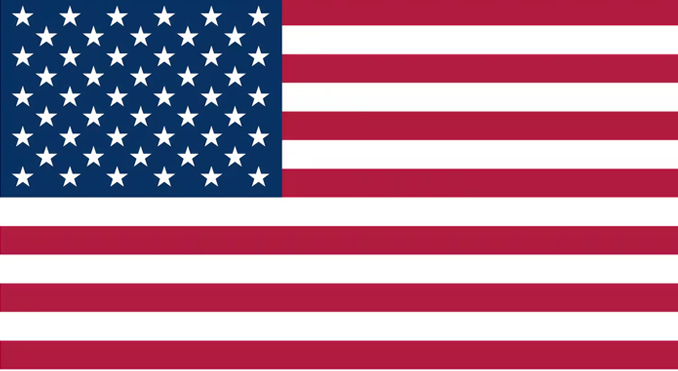
 Congress first authorized the American Flag on June 14, 1777 and now this date in June is observed as Flag Day. The United States Flag is the third oldest of the National Standards of the world. It is older than the Union Jack of Britain or the Tricolor of France. For the design, it was first decreed that there should be a star and a stripe for each state, making thirteen of both. This first design represented the original thirteen colonies. The colors of the flag are explained by the following: Red is for valor, zeal, and fervency. White is for hope, purity, cleanliness of life and rectitude of conduct. The blue color is for heaven, for reverence to God, loyalty, sincerity, justice, and truth. The star (an ancient symbol of India, Persia and Egypt) symbolizes dominion and sovereignty, as well as lofty aspirations. George Washington interpreted the symbolism of the Flag by saying “We take the stars from Heaven, the red from our mother country, separating it by white stripes, thus showing that we have separated from her. The white strips shall go down to posterity representing Liberty”.
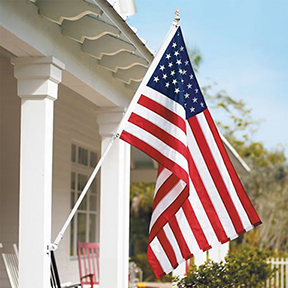
The Flag Code, as adopted by the National Flag Conference, states that during the playing of the National Anthem, The Star-Spangled Banner, all present should stand at attention facing the flag with the right hand over the heart. Men not in uniform should remove their hats. Persons in uniform should render the military salute at the first note of the anthem and retain this position until the last note. When the flag is not displayed, those present should face toward the music and act in the same manner as if the flag were displayed. The Pledge of Allegiance to the Flag should be rendered in the same manner, with the right hand over the heart and by standing at attention. Persons in uniform should remain silent, face the flag, and render the military salute. The display and use of flags by civilians have guidelines for time and occasions for display, hoisting and lowering. The universal custom is to display the flag only from sunrise to sunset on buildings and on stationary flagstaffs in the open. When a Patriotic effect is desired, the flag may be displayed 24 hours a day, if properly illuminated during the hours of darkness. The flag should be hoisted briskly and lowered ceremoniously. The flag should not be displayed on days when the weather is inclement, except when an all-weather flag is displayed. When displayed in a group of flags, the American Flag should be at the center and at the highest point of the group, such as in a group of state flags or localities or pennants of societies. When these flags are flown from adjacent staffs, the flag of the United States should be hoisted first and lowered last. No flag or pennant may be placed above the flag of the United States or to the United State flag’s right. The most important rule of flag etiquette is that the flag must NEVER touch anything beneath it, such as the ground, the floor, water or merchandise. When a flag is in such a condition that it is no longer a fitting emblem for display, it should be destroyed in a dignified way, which preferably is by burning.
To obtain a copy of a poster entitled “The Flag Code” call your local American Legion. Representatives may be found in most County Veteran’s Service Agencies listed in your phone book under County Government. Our American flag is a symbol of our freedom, democracy, and our great country, the United States of America. Knowing how to treat, care for, and display this piece of our heritage is a must for both adults and children to know and a way to express our respect for those that gave their lives defending the flag.