
Dear EarthTalk: How do 3D-printed houses stack up against conventional ones with regard to sustainability, both during construction and then in use? ~J. Homes, via email
3D‑printed homes are fast gaining traction as a sustainable alternative to traditional building. Proponents say they use less material, create less waste, and hold promise for efficient long‑term performance. The question is whether all this adds up in real life when compared to conventionally built houses.
3D printing offers several clear advantages. The additive process builds walls layer-by- layer using only what’s needed, drastically reducing waste. According to Bay Management Group, 3D methods can cut process waste and over‑engineering significantly, creating a shorter supply chain and a more eco‑friendly outcome. Unlike conventional framing which discards off‑cuts and excess materials, printed homes use nearly all the feedstock. Realistically that can reduce overall material consumption by up to 90 percent.
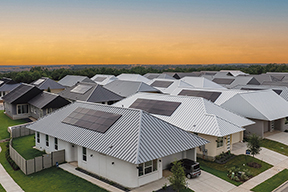
And there’s speed. A community of 100 3D‑printed homes built in Wolf Ranch, Texas was completed in just four to six weeks per home: a fraction of the six to eight months typical for wood‑frame builds. That means fewer machine hours, fewer diesel trucks hauling materials, and less energy burned on site. In Melbourne, Australia, company Luyten recently built a 3D‑printed house in just three weeks total.
Sustainability claims also hinge on materials used. Some 3D homes use advanced concrete mixes like Lavacrete, which provide strength and reduce carbon emissions. Others experiment with bio‑based feeds like wood waste with corn resin. Habib Dagher of the Advanced Structures and Composites Center described one model called BioHome3D as “100 percent renewable, because it is really bio based.” The pellets used in printing can be recycled and reused multiple times while retaining material properties. Also, many 3D‑printed homes deliver superior thermal mass thanks to concrete walls, which improve insulation and reduce heating and cooling needs. Companies like Mighty Buildings now integrate ultra‑low GWP (global warming potential) insulation to further reduce carbon footprint during operation.
There are challenges. Printing still relies heavily on concrete, which has high embodied carbon unless offset or replaced with greener materials. Many finished homes still need traditional tradespeople to install plumbing, wiring, windows and interior finishes. Zoning codes and building rules also limit adoption in many markets. But once integrated with renewable energy and better materials, these homes could match or exceed conventional sustainability standards in both construction and ongoing use.
MORE INFORMATION: https://cobod.com/what-are-the-differences-between-3d-printed-houses-and-traditional-houses/; https://www.sq4d.com/10-benefits-of-3d-printed-homes-over-traditional-construction/.
♦ ♦ ♦ ♦ ♦ ♦ ♦ ♦ ♦ ♦ ♦ ♦
Dear EarthTalk: Why do eco-advocates consider backyard gardens so crucial to conservation? ~Paul Murphy, Butte, MT
Backyard gardens might seem like just a hobby or a way to make a home look nice, but they actually play a much bigger role in conservation. As cities expand and natural habitats shrink, small green spaces like home gardens can provide essential food and shelter for wildlife. This idea falls under garden ecology. This is a field that looks at how gardens function as ecosystems. Homeowners can make a real difference in supporting biodiversity by choosing the right plants and maintaining these spaces with care.
Backyard gardens help is by supporting pollinators like bees, butterflies and birds, all which rely on plants for food. In return, they help plants reproduce. “Urban gardens can act as mini-refuges for pollinators, especially in places where natural habitat is disappearing,” says Dr. Susannah Lerman, research ecologist with the U.S. Forest Service. First of all, without enough green spaces, pollinator populations decline. This then affects everything from wild plant growth to food production. Gardens also create small patches of habitat that connect larger green spaces. This makes it easier for wildlife to move around safely.
Not all plants offer the same benefits. Native plants that naturally grow in a specific area are the best choice for conservation gardening. They require less water and maintenance since they’re adapted to local conditions, and they provide the right food and shelter for local wildlife. On the other hand, non-native or ornamental plants look nice but can do more harm than good, aggressively taking over native habitats.
Garden ecology research also shows that diverse gardens help improve soil health and support a wider variety of species. A mix of trees, shrubs, and flowers at different heights can create a more balanced ecosystem. The more plant diversity a garden has… the more kinds of insects, birds, and small mammals it can support. Some homeowners even participate in citizen science projects e.g. they can track the species that visit their yards to contribute to conservation research.
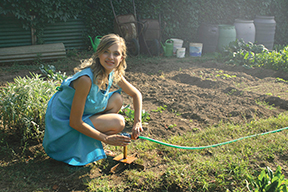
Making a garden more wildlife-friendly doesn’t require a complete overhaul. One can start by planting a few native species, reducing pesticide use, and letting part of their yard grow more naturally. Even small changes can make a difference. For example, leaving fallen leaves for insects to hide in or providing a water source for birds. Backyard gardens may not seem like much, but when enough people take the right steps they become an important part of conservation efforts.
MORE INFORMATION: phys.org/news/2023-10-residential-yards-opportunity-biodiversity.html; https://www.metroparks.com/what-is-garden-ecology-and-how-does-it-impact-your-life/.
♦ ♦ ♦ ♦ ♦ ♦ ♦ ♦ ♦ ♦ ♦ ♦
Dear EarthTalk: How are we growing food in labs to lessen the agricultural impact on the planet? ~ Bill Jehsen, via email
The U.S. has nearly two million farms, with over half of its land used for agriculture. Climate change affects agricultural productivity, sometimes enhancing or reducing yields, while air pollution from ground-level ozone weakens plant growth and increases disease susceptibility. Also, rising populations and demand for food, feed, fiber and fuel have intensified competition for land, a phenomenon known as the global land squeeze. The New World Resources Institute projects that by 2050, agricultural expansion will need land nearly twice the size of India; demand for wood will require an area the size of the U.S.
Agriculture is the largest driver of land-use change, causing significant carbon loss and biodiversity loss. It has cleared 70 percent of grasslands, 50 percent of savannas, 45 percent of deciduous forests, 27 percent of tropical forests, and 50 percent of wetlands worldwide. Scientists argue that halting ecosystem conversion and degradation is crucial for meeting climate and biodiversity goals, as projected agricultural expansion could use up to 40 percent of the remaining carbon budget needed to limit warming.
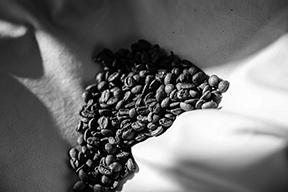
One industry particularly affected by this issue is coffee. Brazil, a major coffee producer, may lose 50 percent of arable land by 2050. A potential solution comes from Atomo Coffee, a company that has developed a ‘beanless brew’ using superfoods and ingredients like date seeds, lemon, sunflower seeds and caffeine from decaffeinated green tea. Andy Kleistch, the CEO, says they “started this company to actually make a difference in the world,” and this movement is spreading to larger coffee chains. Atomo has attracted nearly $52 million in investment, and in 2023 New York’s Gumption Coffee introduced it to the market. The company aims to scale up production to 40 million pounds annually.
Meat is another major threat. Pet food accounts for 20 percent of global meat consumption. Lab-grown pet food has recently become available in Europe, with UK consumers now able to but cultivated chicken-based pet food from London startup Meatly, made by culturing animal cells in bioreactors with water and nutrients, offering a more sustainable alternative with 50-60 percent less land use, 30-40 percent less water use, and 40 percent lower carbon emissions. Meatly also aims to bring cultivated meat to human consumers–though it will still produce emissions. Similar innovation is happening in the dairy industry. Boston-based Brown Foods has developed UnReal Milk, the first lab-grown whole cow’s milk made without cows. Independent testing confirms it contains all essential dairy proteins, fats and carbohydrates.
Lab-grown food options could become mainstream, but consumer acceptance is crucial.
MORE INFORMATION: https://www.wri.org/insights/manage-global-land-squeeze-produce-protect-reduce-restore.
♦ ♦ ♦ ♦ ♦ ♦ ♦ ♦ ♦ ♦ ♦ ♦
EarthTalk® is produced by Roddy Scheer & Doug Moss for the 501(c)3 nonprofit EarthTalk. See more at https://emagazine.com. To donate, visit https://earthtalk.org. Send questions to: question@earthtalk.org.