
Dear EarthTalk: Is it true that wireless electricity distribution is a thing? And can we expect to see it implemented widely in our lifetime? ~ Paul Baron, Albany, NY
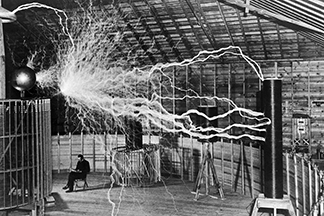
Wireless electricity distribution is the transmission of electrical energy without the use of wires or tangible physical links. Nikola Tesla, a Serbian-American inventor, visionary and an early adaptor of the idea, found success with initial experimentation with wireless electricity transfer. However, further study led to a string of faulty results, revealing that the science backing his infrastructure was largely flawed.
His experiments’ diminishing successes led to a decline in investment, leaving an effective application unexplored at the time. Barriers lie primarily in the basic principles of physics. The inverse square law, for example, says that the further electricity travels, the more it weakens, meaning effective transport of electricity (without wires) over long-distances is not only inefficient, but difficult to achieve.
With the cost and scientific barriers to the use of wireless electricity distribution, it’s unlikely to be widely implemented in our lifetime. Yet, significant progress has been made in technology related to the topic for small-scale and specific use. Indiana’s INDOT project to build a road that wirelessly charges electric vehicles (EVs) as they drive has achieved success. Similarly, work by companies like WiTricity (EV field), and Ossia (in the infrastructure industry) present significant benefits for humanity as a whole. While its long-term efficacy and use aren’t fully explored, the implications for such a project are immense. With its success, there could be the wide-spread adoption of similar motorways, advancing the practicality of EVs, in turn multiplying the decrease in carbon output from personal vehicles.
Additionally, wireless electricity distribution could be a sustainable solution to the devastation that follows a natural disaster. In a conversation with Wired, Dr. Chaouki Kasmi, a researcher at the Directed Energy Research Center in Abu Dhabi, contended, being able to “very quickly bring energy to impacted locations would be a game changer.” If the technology needed for wireless energy distribution advanced to be viable for widespread use, not only would the after-effects of disaster be mitigated, but EVs and other sustainable options would become increasingly viable. Phones, laptops and other household items could go without the inconvenient clutter, leading to a new era of technology. The applications and benefits are not fully known, but the challenges currently seen are significant.
The principal physics issues associated with advancement are significant, so widespread adoption of the technology is not likely to occur anytime soon. Still, small-scale applications still have benefit, presenting a possible solution to many of the smaller convenience issues presented by sustainable choices.
MORE INFORMATION: wired.com/sponsored/story/qinetiq-innovation-trends-power-beaming.
♦ ♦ ♦ ♦ ♦ ♦ ♦ ♦ ♦ ♦ ♦ ♦
Dear EarthTalk: Is it true that plants communicate by sending chemical signals through the air? ~Melissa Hart, via email
Recent research reveals that plants, despite lacking brains or nervous systems, possess a surprising ability to “talk” via chemical signals. This fascinating discovery sheds light on a hidden world of plant communication with profound implications for agriculture, ecology and climate resilience. Plants communicate mainly through volatile organic compounds (VOCs)—chemical signals they release into the air—which serve as a sophisticated alarm system, warning other plants about potential threats like herbivores, pathogens or environmental stressors. When a plant detects an attack, it can alert other plants, enabling them to ready defensive chemicals or close their stomata to conserve water and nutrients.
According to National Geographic, this signaling system operates like an “early warning network,” letting plants prepare themselves and the surrounding community for incoming dangers. This highlights the intricate interdependence within plant ecosystems. One well-documented example involves tomato plants. When attacked by pests, tomato plants release VOCs that signal neighboring plants to ramp up their production of defensive chemicals, effectively creating a shared defense strategy. This phenomenon isn’t limited to a single plant species—”eavesdropping” plants in the vicinity can also benefit from these warnings, adapting their defenses even if they aren’t directly under attack. In addition to defensive strategies, plants use VOCs for environmental adaptation. Certain plants release VOCs to attract the predators of their attackers. A classic example is caterpillar-infested plants emitting signals to draw in parasitic wasps, which lay eggs in the caterpillars and effectively neutralize the threat.
Understanding plant communication could revolutionize agriculture. Farmers could enhance crop resistance to pests and reduce reliance on chemical pesticides. This would contribute to ecological balance by preserving biodiversity and reducing environmental impact. Moreover, plant communication plays a crucial role in maintaining ecosystem health. As Wired notes, this “language of chemical signals” isn’t just about individual survival—it’s about fostering community resilience in the face of challenges.
Plant communication does have skeptics. Some scientists believe it is simply a passive chemical response and not “communication.” Nonetheless, the discovery of chemical signaling in plants highlights the complexity and interconnectedness of ecosystems. As SciTechDaily notes, understanding these signals could revolutionize how we protect crops and manage natural ecosystems. By unraveling the secrets of plant communication, we gain not only insights into the hidden lives of plants but also tools to build a more sustainable and resilient future.
MORE INFORMATION: https://www.nationalgeographic.com/science/article/plants-can-talk-yes-really-heres-how.
♦ ♦ ♦ ♦ ♦ ♦ ♦ ♦ ♦ ♦ ♦ ♦

Dear EarthTalk: Is New York City the first big U.S. city to mandate that all new buildings avoid fossil fuels and only offer electricity hookups? Will others likely follow suit? ~ J.L., via email
Whether the Big Apple is truly the “greatest city in the world” may be debated, but one fact is clear: New York City is officially the first large U.S. city to adopt a comprehensive, city-wide mandate requiring most new construction to avoid fossil fuels and rely entirely on electric systems—and its policy is likely to influence other cities and states. “I’m excited that we are finally tackling, statewide, our largest source of fossil-fuel emissions,” said state Assemblymember Emily Gallagher, who sponsored the 2023 legislation. This new policy places the city at the forefront of green infrastructure policy and is also shaping conversations nationwide.
Buildings are the main focus of this mandate for a clear reason: New York’s residential and commercial buildings produce as much as 32 percent of statewide greenhouse-gas emissions. making them a critical source of climate pollution. The effects of climate change are already seen in New York’s climate and infrastructure in recent heat waves, rising sea levels and storm damage. Lawmakers argue that electrifying buildings is essential not only for reducing emissions but also for improving air quality and public health
Under New York’s all-electric buildings law, most new construction will be prohibited from installing fossil-fuel equipment as the policy phases in between 2026 and 2029. Beginning in 2026, most new buildings up to seven stories must be all-electric. By 2029, the requirement expands to larger buildings as well. However, exemptions still exist for facilities such as hospitals, commercial kitchens and highly specific industrial uses. New York City’s action builds on Local Law 154, aligning the city with a broader statewide push towards electrification.
Although smaller cities and municipalities have previously experimented with gas restrictions, New York is the first large U.S. city to adopt such a broad, citywide all-electric requirement. For example, Berkeley, California, became the first city in the nation to ban natural gas in most new buildings in 2019, but it is far smaller in scope compared to New York. In contrast, New York’s mandate applies citywide, and New York State has also adopted a similar statewide standard, highlighting its leadership.
It is likely that other cities and states will consider similar mandates in the coming years. Supporters point to long-term climate benefits, reduced indoor air pollution and alignment with clean-energy goals. Even in smaller towns like Crested Butte, Colorado, local officials have shown strong support for these types of policies. A member of the town council argued, “It’s an investment in the future. Going forward people will see this as the way to cleaner living.”
MORE INFORMATION: urbangreencouncil.org.
♦ ♦ ♦ ♦ ♦ ♦ ♦ ♦ ♦ ♦ ♦ ♦
EarthTalk® is produced by Roddy Scheer & Doug Moss for the 501(c)3 nonprofit EarthTalk. See more at https://emagazine.com. To donate, visit https://earthtalk.org. Send questions to: question@earthtalk.org.