

“We Die Alone” by David Howarth
A WWII Epic of Escape and Endurance
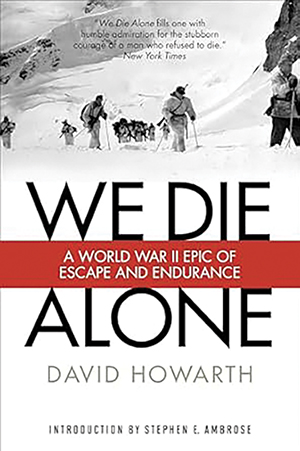 This is an unbelievable yet true story which recounts an exciting tale of escape among the miseries of World War II. In March 1943, a team of expatriate Norwegian commandos sailed from northern England for Nazi-occupied arctic Norway to organize and supply the Norwegian resistance. Due to an unexpected betrayal, the group was ambushed by the Nazis. One lone survivor, Jan Baalsrud, in near death circumstances begins a fight of a lifetime to not only escape capture, but to stay alive.
At first, he drags himself towards a small arctic village, while frostbitten, snow-blind, and pursued by the Nazis. Near death, delirious, and a virtual cripple, he eventually reaches the village where at mortal risk to themselves, he finds villagers who are determined to save him. Although the efforts of both Jan and his helpers are heroic, they had numerous setbacks and enough distress to make anyone give up. One such time included being left immobile, in a cave, and covered with snow on a mountain pass for weeks- his only hope was of being found by another group who were to bring him further towards safety.
Heroism, endurance and determination of the human spirit are the recurring themes throughout this story. Those traits are countered by such situational intensity, that the reader quickly reaches the point of questioning how one person could possibly survive through multiple impossible situations, and at the same time encountering others willing to assist him over and over despite great personal risk. We Die Alone is an astonishing true story verified and told by respected British historian and author David A. Howarth.
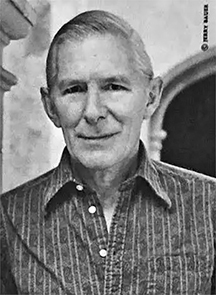 After graduating from Cambridge University, Howarth was a radio war correspondent for BBC at the start of the Second World War, joining the Navy after the fall of France. He rose to the rank of lieutenant commander and spent four years in the Shetland Islands, becoming second in command of the Shetland Naval base. He was involved in the Special Operations Executive (SOE), including the Shetland Bus, an SOE operation manned by Norwegians running a clandestine route between Shetland and Norway, which utilized fishing boats with crews of Norwegian volunteers to land agents and arms in occupied Norway. For his contributions to espionage operations against the German occupation of Norway, he received King Haakon VII’s Cross of Liberty. The King also made Howarth a Chevalier First Class of the Order of St Olav.
After the war, he wrote a few novels and many nonfiction books including numerous biographies, autobiographies, and history books- many on naval and military history. Howarth died in 1991. At his request, his ashes were scattered over the waters of Lunna Voe, Shetland, near Lunna House, the first base of the Shetland Bus operation.