

Dear EarthTalk: What are some natural ways to fight ocean acidification? ~ Jim Kline, Boston, MA

Ocean acidification, the lowered pH levels of ocean water, has become a big threat to the environment in recent years. According to the European Environment Agency, the ocean’s acidity has increased 15 percent from 1985 to 2024 because of rising levels of carbon emissions. It occurs when excessive amounts of carbon dioxide (CO2) are absorbed by the ocean, causing naturally-forming carbonate ions to break down into hydrogen ions. This lowers both the pH level of the water and the quantity of available carbonate ions. For mussels, coral, clams, crabs and other organisms that depend on carbonate ions to create their shells, ocean acidification is extremely detrimental. Furthermore, losing a consistent supply of mussels, oysters, clams and lobsters endangers a 100-million-dollar industry and many employees.
Kelp farms are one sustainable local solution. These underground farms cultivate seaweed that naturally consume CO2 and prevent it from harming other marine life. “We always suspected that there was this positive interaction between the mussels and kelp,” says Matt Moretti, CEO and co-owner of Bangs Island Mussels. “We suspected that because kelp photosynthesises, it sucks carbon out of the water and therefore must be good for the ocean and good for the mussels.” Colder regions with lower ocean temperatures are typically at higher risk for acidification. With growing numbers of kelp farms in regions like New England and the Pacific Northwest, experts are effectively fighting acidification where it matters most. Moretti says that kelp farming actually has a significant impact. In many cases, farmers pass along the cultivated kelp to local producers who then create kimchi and other fermented products.
In addition, the National Oceanic and Atmospheric Administration (NOAA) is addressing ocean acidification at a federal level with their CO2 Reduction (CDR) strategy. This method takes atmospheric CO2 and keeps it on land or underground instead of in the atmosphere. NOAA is making progress in the industry with leading CDR pathway models and projections, data observations of coasts, and research on ecosystems. Also, NOAA plays a crucial role in regulating voluntary carbon markets and CDR technology. According to a report by McKinsey & Company, by 2050, the CDR industry is projected to generate over a trillion dollars. NOAA’s oversight ensures the credibility of the growing industry and promotes long-term impact on ocean acidification.
Alongside the efforts of local kelp farmers and national organizations, individuals can work to fight ocean acidification by reducing their personal carbon emissions and supporting organizations that are committed to minimizing their carbon footprint.
MORE INFORMATION: https://oceanacidification.noaa.gov/carbon-dioxide-removal/; https://www.ucs.org/resources/co2-and-ocean-acidification.
♦ ♦ ♦ ♦ ♦ ♦ ♦ ♦ ♦ ♦ ♦ ♦
Dear EarthTalk: How are drones being used to promote conservation? ~ L.J. Smith, Smithfield, RI
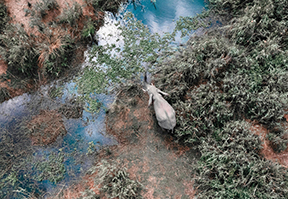
When you hear the word drones, perhaps you picture flying and faceless androids on some top-secret intelligence mission, armed to the teeth and stealthy as a bandit. What you probably are not picturing are drones flying over burnt forests dropping seed pods or skimming the surface of the ocean scanning for endangered whales. However, in recent years, drones are being used for exactly that.
Drone producer JOUAV defines wildlife drones as “unmanned aerial vehicles designed to monitor, track, survey and protect wildlife and their habitats.” They come in all shapes and sizes with three main types: fixed wing, which are like traditional airplanes and can cover large distances; multi-rotor drones, which have multiple rotating blades and can hover in place to capture detailed images in confined areas at low altitudes; and hybrid drones, which are a combination of the other two.
With drone technology at their disposal, scientists can monitor and implement conservation efforts with more accuracy and less disruption. Take, for instance, the Snotbot: a drone that flies through the exhaled air of whales and collects information on DNA, stress and pregnancy hormones through respiratory droplets. Charlotte Edmond of the World Economic Forum notes the Snotbot helps scientists “understand whales and dolphins, many of which are critically endangered, in a way which doesn’t stress them out.”
Wildlife drones also combat poaching and natural disasters. In Africa and India, governments and wildlife protection groups use thermal imaging and night vision to track illegal activity. In the wake of wildfires in California, drones are powerful tools for reforestation, cutting response times from years to months, and LiDAR technology helps map out deforestation areas. A study conducted in Kumamoto, Japan showed that 80 percent of seeds delivered by drones in biodegradable pods sprouted, compared to 30-50 percent by manual planting. This promising statistic offers hope into restoring burnt and damaged ecosystems.
However, with powerful technology, also comes a staggering price. Drones are costly, no doubt– about $116,000 each. And most countries are protective of their air space. Laws often require drones to have licenses, meaning wildlife drones have a lot of red tape to fly through before they can save the world. Nonetheless, drones are playing an increasingly important role in nature conservation efforts. You can help propel these efforts by donating to wildlife organizations such as the World Wildlife Fund or writing to local conservation teams on the benefits of wildlife drones.
MORE INFORMATION: jouav.com/blog/wildlife-drone.html; weforum.org/stories/2022/12/endangered-species-drones-conservation-ai-technology.
♦ ♦ ♦ ♦ ♦ ♦ ♦ ♦ ♦ ♦ ♦ ♦
Dear EarthTalk: What’s new regarding more efficient batteries that can help usher in a new age of renewable energy? ~ Paul Beckman, Marion, OH
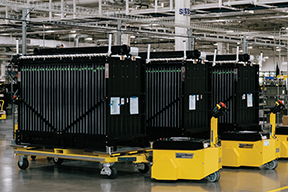
Batteries are everywhere—in your phone, your car—even the artificial organs that many depend on for life. But behind this universal usage is extensive ecological damage—the battery-making process requires intensive mining for heavy metals, leaks toxins into soil and water, and depletes local water sources in communities. But new and innovative ways to increase the efficiency and sustainability of batteries.
One of the most novel innovations out this year is iron-air batteries, those that use a sustainable rust-based reaction to produce energy. As air passes through the cathode (the negatively-charged portion of the battery) and reacts with the liquid, a water-based electrolyte, ions subsequently latch onto the positively-charged iron anode, producing rust. The movement of ions through this rust produces electricity, a process that can be repeated by continually unrusting the battery after each reaction. Form energy co-founder and Chief Scientist Yet-Ming Chiang notes the economic viability of iron-air batteries for large-scale usage: “Air is still free and iron is one of the most widely produced, lowest cost materials in the world.” In Minnesota, a 1.5 megawatt pilot project was shown to be able to power 400 homes for 100 hours, a clear example of how iron-air batteries could be the next big innovation for large-scale battery usage.
Besides iron-air batteries, solid-state batteries are what George Crabtree, director of the Joint Center for Energy Storage Research, believes to be “very likely… the next big thing at the commercial level.” Solid-state batteries use electrolytes like argyrodite, garnet and perovskite that are more efficient than liquid-electrolytes in nearly all aspects: they’re lighter, take up less space and can hold more energy per unit of mass. These qualities make them effective for Electrical Vehicle (EV) usage and grid-scale energy storage. However, researchers like University of Houston professor Yan Yao, who recently developed a glass-like electrolyte, are still looking for materials that fulfill all four factors for viability in the market: low-cost, easy-to-build, having a high degree of mechanical stability, and chemical stability.
With lithium-based batteries being so ubiquitous, some scientists are looking to improve on the existing model rather than supplanting it entirely. Batteries made out of Lithium-Sulfur, for example, exhibit four times greater energy density than traditional lithium batteries due to their usage of light, active materials. Ultimately, innovations in batteries are a cornerstone to shaping a more sustainable future. According to associate professor of materials science at Columbia University Yuan Yuang, making renewable energy more reliable will help stabilize energy grids and support a more sustainable energy future.
MORE INFORMATION: https://saft.com/en/media-resources/our-stories/three-battery-technologies-could-power-future.
♦ ♦ ♦ ♦ ♦ ♦ ♦ ♦ ♦ ♦ ♦ ♦
EarthTalk® is produced by Roddy Scheer & Doug Moss for the 501(c)3 nonprofit EarthTalk. See more at https://emagazine.com. To donate, visit https://earthtalk.org. Send questions to: question@earthtalk.org.