
Dear EarthTalk: Are any police, fire or EMS departments using electric vehicles today? — Patrick James, Reno, NV
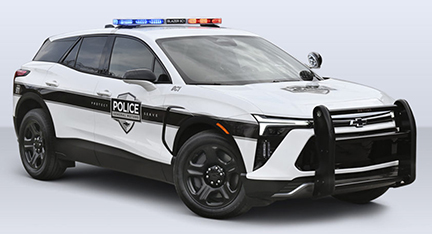
Electric vehicles, or EVs, are vehicles run partially or entirely on re-chargeable electric power. The fast-emerging EV market spans a diverse range, including battery electric vehicles, plug-in hybrids, hybrids, fuel cell electric vehicles, and much more. While Tesla dominates the public attention, a wide array of models, such as those from Ford and Hyundai, are being employed in the public sector.
EVs are steadily gaining traction across the U.S., not just with individual buyers, but also through public services sectors such as police, fire and emergency medical services. The adoption of electric vehicles began with smaller testing programs in the early 2010s in cities like Los Angeles and New York City. However, in recent times, the integration of EVs in the public sector has picked up incredible momentum as a result of increasing environmental concerns and improvements in technology. In 2024, the Police Department of South Pasadena City completely replaced its gasoline-powered vehicles with EVs. “This initiative not only ensures the safest vehicles for officers and staff, but also leads to substantial reductions in both fuel and maintenance costs,” said South Pasadena Police Chief Brian Solinsky.
As more departments consider electrifying their fleets, the advantages of EVs in the emergency sector have become increasingly evident. Key benefits include reduced carbon emissions and lowered fuel and maintenance expenses. For police cruisers, impressive acceleration and speed, along with noise-free driving, become major benefits to achieve enhanced performance while avoiding any disruptions. In the case of ambulances, rapid response time and a quieter operating environment can be beneficial, especially during high-stress medical situations. Lastly, for fire trucks, EVs allow for emission-free firefighting in addition to a quick response time. The adoption of EVs seems to be a shift toward a more disaster-resilient, environmentally sustainable, and economically efficient future. “Our sustainable transportation researchers are driving progress on clean energy solutions for entire sectors,” said Chris Gearhart, the Director at the U.S Department of Energy’s National Renewable Energy Laboratory’s Center for Integrated Mobility Sciences, referring to a big push towards electrifying major industries.
However, this change comes with its setbacks, such as limited range due to frequent charging halts. This challenge further exacerbates during high-stakes situations such as criminal pursuits or medical emergencies. Next, since EVs are solely reliant on the power grid, they become highly vulnerable during power outages or face battery strains during extreme weather conditions. Lastly, the initial cost of establishing an effective and available charging infrastructure, along with transforming entire fleets, places a significant financial burden on emergency departments.
While the transition towards EVs in the emergency sector is a promising step toward a cleaner future, it is crucial to address the challenges that come with it. Securing loose ends regarding the infrastructure and grid dependency should be combated with a gradual hybrid transition, allowing emergency departments to adapt slowly while proactively mitigating all potential risks.
CONTACTS: Electric Cars and the Future of Emergency Services: https://cyberswitching.com/electric-cars-and-the-future-of-emergency-services/
♦ ♦ ♦ ♦ ♦ ♦ ♦ ♦ ♦ ♦ ♦ ♦
Dear EarthTalk: What’s the connection between global warming and increased eye problems for humans? — Pauline Mercy, Wilmington, NC
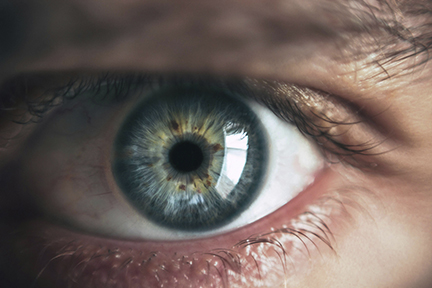
When most people think of global warming, they picture melting glaciers, intense heat waves, or rising seas. What is less widely recognized is the growing impact of climate change on human eye health. Rising global temperatures, worsening air quality, shifting disease patterns, and increasing water scarcity are all contributing factors that heighten the risk of eye-related problems worldwide. As the atmosphere warms and the ozone layer thins in some regions, people are exposed to more intense ultraviolet radiation. This type of radiation has been strongly linked to conditions such as cataracts, macular degeneration, and pterygium, also known as “surfer’s eye.” Dr. Anne Lynch of Stony Brook University notes, “The eyes, like the skin, are vulnerable to UV damage—and we’re seeing an uptick in related conditions as temperatures rise globally.” In other words, the same sunlight that burns the skin can also quietly damage vision.
Air pollution exacerbates the problem. Climate change drives an increase in wildfires, worsens urban smog, and traps fine particulate matter in the air, all of which irritate the eyes and can trigger dry eye syndrome, allergic conjunctivitis, and other inflammatory conditions. Some research even shows that during wildfire seasons, hospital emergency rooms see measurable increases in eye-related visits. Meanwhile, warmer and wetter environments allow insects that carry pathogens to expand into new regions. This has resulted in the spread of infectious diseases such as trachoma, a bacterial infection that can cause blindness if untreated, while fungal and viral eye infections are also becoming more common under shifting climate conditions.
Water scarcity adds another dimension. Prolonged droughts and shrinking access to clean water make it harder for people, especially in low-income regions, to maintain basic hygiene. Without enough clean water, the risk of eye infections rises sharply. Tragically, those who contribute least to climate change are often the ones who suffer the most severe consequences.
There are, however, meaningful steps that can help. On an individual level, wearing sunglasses that block ultraviolet rays provides critical protection, and reducing exposure to polluted air can lessen irritation and disease risk. On a broader scale, stricter air quality regulations, programs that expand access to safe water, and greater public awareness of climate change’s hidden health impacts all play essential roles. Climate change is not only altering weather systems and ecosystems but also directly affecting human vision, making clear that the eyes are yet another front line in the struggle to adapt to a warming world.
CONTACTS: Impacts of climate change on ocular health, https://www.sciencedirect.com/science/article/pii/S2667278223000950; How climate change threatens eye health, https://yaleclimateconnections.org/2025/05/how-climate-change-threatens-eye-health/; Is Climate Change Harming Your Eyes? https://news.cuanschutz.edu/ophthalmology/is-climate-change-harming-your-eyes; The Effects of Climate Change on Eye Health, https://www.dragarwal.com/blog/the-effects-of-climate-change-on-eye-health/.
♦ ♦ ♦ ♦ ♦ ♦ ♦ ♦ ♦ ♦ ♦ ♦
Dear EarthTalk: Can you set the record straight about whether artificial turf is actually bad for our health and/or the environment? — Beth R., Summitt, NJ
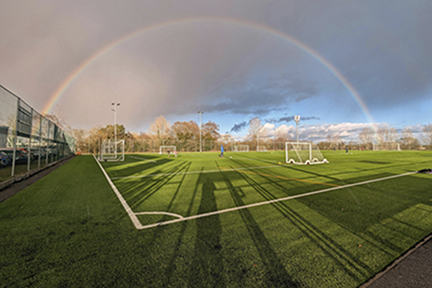
Artificial turf fields have been rising in popularity as a low-maintenance (no mowing or watering) alternative to natural grass; North America has over 18,000 synthetic fields, and 1,500 are added annually. Marketed as durable and green-looking year-round, it is also becoming known for its controversial health effects, with cities like Boston, Massachusetts, already enacting bans.
Artificial turf consists of layers: plastic blades at the surface, backing to hold the blades in place, and infill for cushioning and upright support. Carcinogenic chemicals such as heavy metals and volatile organic compounds have been found in the crumb rubber infill made from recycled car tires that is used. The U.S. Environmental Protection Agency (EPA) confirmed the presence of benzene, arsenic, lead and more in the fill. Mount Sinai identified similar chemicals in “safer” crumb rubber alternatives made from plastic, virgin rubber and plant-based materials. Exposure to these harmful chemicals may occur by ingestion, absorption or inhalation, with children at highest risk because of faster breathing and developing organs.
Many turf chemicals are soluble in water, allowing them to enter groundwater and soil when precipitation occurs. PFAS, often referred to as “forever chemicals,” have been found in wetlands near synthetic fields, suggesting their ability to contaminate surrounding environments. The plastic components of synthetic fields also lead to microplastic pollution, with estimates of around two tons of it being released into the environment yearly and 20,000 fibers entering waterways daily.
Artificial turf can also have other negative effects: It retains more heat, creating hazardous surface temperatures that can reach 200°F and contribute to local heat islands. As a result, they often require water for irrigation to keep surface temperatures low. While natural grass has the ability to oxygenate the air around us, capture carbon and reduce runoff, synthetic blades are unable to reap these environmental benefits. Lasting only eight to 10 years, it must be disposed of, further contributing to pollution.
However, there is still a lack of research regarding this topic, with most focusing on crumb rubber. Many scientific questions remain to be answered, such as how children can be exposed to chemicals through oral and dermal routes. The evidence that we currently have is limited, with most studies unable to link synthetic turf use to actual health outcomes. Until these gaps in our understanding are filled, the chemical dangers of synthetic playing fields will remain uncertain.
Experts are divided, with Yale epidemiologist Vasilis Vasiliou stating, “I would not recommend parents let their children play on there. Period.” For those who do use artificial turf, precautions include ventilating indoor fields, showering after play, and vacuuming infill that enters your house. Be cautious of labels like “organic,” “green,” or “eco” because they do not guarantee safety and aren’t regulated for turf products. Instead, choose transparent companies and ask the manufacturer for a full list of components, as Safety Data Sheets don’t disclose all chemicals.
CONTACTS: Environmental and health impacts of artificial turf: a review, https://pubmed.ncbi.nlm.nih.gov/24467230/.
♦ ♦ ♦ ♦ ♦ ♦ ♦ ♦ ♦ ♦ ♦ ♦
EarthTalk® is produced by Roddy Scheer & Doug Moss for the 501(c)3 nonprofit EarthTalk. See more at https://emagazine.com. To donate, visit https://earthtalk.org. Send questions to: question@earthtalk.org.