


Dear EarthTalk: Is it true the northern lights will be more intense over the next 50 years, and if so, why? Will this have any negative effect on our environment? ~ H. Binger, via e-mail
The northern lights are considered one of nature’s most spectacular displays. These lights are mainly seen from high-latitude areas near the Arctic and occur when the Sun releases charged particles during solar winds. These particles move closer to Earth, and are drawn toward its magnetic poles and collide with oxygen and nitrogen atoms. When these atoms return to their regular state, they create these lights.
Scientific observations have pointed to more intense northern lights occurring in the next several decades, due to increased solar activity. In its 11-year cycle, the Sun transitions between low and high activity periods, or solar minimum and maximum. Because the sun is currently nearing its solar maximum, the efflux of solar energy leads to more recurring, stronger flares that interact with Earth’s atmosphere and create heightened auroras. “During solar geomagnetic storms, there’s a lot more of these energetic charged particles in the space around Earth, so we see a brightening of the northern lights and the region over which you can see them spreads out to include places like the lower 48 states that usually don’t see this display,” says Scott England, a professor at Virginia Tech.
Through geomagnetic storms, auroras can also heat the Earth’s upper atmosphere, causing it to expand and potentially increase atmospheric drag on satellites. The influx of energized particles can also cause disturbances in the ionosphere that lead to signal loss and issues in radio communication and GPS systems. Moreover, as a result of climate change, increasing cloud cover and weather changes, auroras may also decrease in visibility, even if they occur more frequently. Geomagnetic storms can induce electrical currents that damage power lines and have implications for the power grid, including blackouts. Increased aural activity may also cause decreased efficiency in long-distance and emergency communications because of its disruptive effects on high-frequency radio signals.
The U.S. Geological Survey reports that a severe solar storm could disrupt the nation’s power grid for months, potentially leading to widespread blackouts. The resulting damage and disruption from such an event could cost upwards of $1 trillion, with a full recovery taking months if not years.
To combat the implications of intense northern lights, government agencies can improve protections in power grids and warning systems that caution against solar storms. Infrastructure companies can also build radiation-resistant satellites that remain in orbit and avoid polar routes during high solar activity.
MORE INFORMATION: www.forbes.com/sites/jamiecartereurope/2025/05/09/get-ready-for-50-years-of-intense-northern-lights-scientists-say/
♦ ♦ ♦ ♦ ♦ ♦ ♦ ♦ ♦ ♦ ♦ ♦

Dear EarthTalk: Are there humans on the planet today still living hunter-gatherer subsistence lifestyles? If so, how are they dealing with modern-day pollution or climate change? ~ P.K. via email
For the vast majority of human history, up until around 12,000 years ago, every human was a hunter-gatherer. As hunter-gatherers, humans lived with a subsistence lifestyle that relied on hunting, fishing and foraging for wild vegetation and other nutrients like honey for food. This lifestyle declined due to modern innovations and agricultural practices. Today, very few groups of hunter-gatherers exist, scattered around the globe, and all have been affected by modern-day issues.
In Tanzania, the Hadza people are nomadic, making temporary huts and moving in accordance with local animals rather than creating permanent settlements. However, the animals and plants they need to survive, including cows and local herbs, have been disappearing rapidly, while much of their local forests have been burned to make space for crops or razed to create water holes for irrigation. In the last 50 years, the Hadza lost over 90 percent of their ancestral land to farmers and cattle herders. As Shani Msafin-Sigwaze, the first Hadza to attend university and the informal spokesperson for the group, said, “The Hadza are suffering much because the natural food is disappearing. Without the land, the Hadza will disappear.”
Similarly, the Arctic’s Inuit people face environmental issues. They have consistently adapted to difficult environments throughout history by wearing thick clothes and moving southward when ice caps melted. However, global warming has increased the rate at which ice caps are melting, forcing more frequent migration. Furthermore, the transition to modern life fostered frustration and depression, leading to alcoholism, suicide, violence, and delinquency for the first time in the group’s history. And Paraguay’s Ache people were forced to combat attempts to remove them from their ancestral homelands for other land to be developed. Similarly, the Pila Nguru of Australia faced encroaching farmlands, railways, and the use of their land for atomic testing.
Generally, hunter-gatherer groups are often threatened by pollution, climate change, deforestation and industrial projects. The presence of mineral resources and commercial land make these areas a hotspot for industry seeking to construct oil pipelines, dams or mining sites. In addition to industrial projects, the loss of biodiversity through deforestation and the subsequent extinction of animal species decreases food sources and the supply of traditional medicine. Citizens and governments must make efforts toward preserving the cultures and homelands of hunter-gatherer groups. The Brazilian government, for instance, is actively trying to protect lands from incursion and development in areas that hold uncontacted hunter-gatherers. Citizens can support such efforts by opposing the industrialization of untouched areas and advocating for policies that preserve ancestral lands.
MORE INFORMATION: https://education.nationalgeographic.org/resource/hunter-gatherer-culture.
♦ ♦ ♦ ♦ ♦ ♦ ♦ ♦ ♦ ♦ ♦ ♦
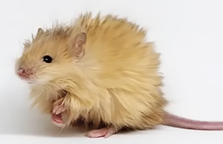
Dear EarthTalk: Does the recent birth of wooly mice and dire wolf pups mean that “de-extinction” is a real thing now? And why would we want to bring back dire wolves, wooly mammoths or saber-toothed cats anyway? ~ Paul Wilson, San Francisco, CA
In recent months, the Dallas-based biotech firm Colossal Biosciences announced the rebirth of the long-extinct dire wolf and woolly mammoth, species that had been extinct for thousands of years, pioneering the first successful de-extinctions in history. In response, some view this as a revolutionary breakthrough, whereas others express skepticism about the legitimacy of the de-extinction claim.
On its website, Colossal states that its mission is to “secure the health and biodiversity of our planet’s future”. The company claims that the restoration of extinct species would improve the ecosystem and combat biodiversity loss as they are reintroduced to their original habitats. Additionally, research on de-extinction can be used to protect endangered species; in fact, the company has leveraged its gene-editing technology to repopulate the critically endangered red wolf.
In principle, the process of de-extinction is relatively straightforward. The woolly mammoth, despite being extinct for over 4,000 years, has been preserved in permafrost, allowing Colossal to access and extract the genomes easily. Then, by using the gene-editing tool CRISPR, Colossal edited a mouse’s stem cell to exhibit the unique traits of the mammoth and introduced the cell into a mouse embryo. When the mouse pups were born, all of them expressed the woolly mammoth’s DNA through their “dramatically altered coat color, texture, and thickness reminiscent of the woolly mammoth’s core phenotypes.” Colossal applied a similar approach with the dire wolves by editing the genome of the gray wolf, the closest surviving relative to the dire wolf, to express dire wolf traits. As a result, three dire wolf puppies were successfully born.
Although Colossal Biosciences claims to have completely restored the extinct dire wolf, some scientists are skeptical. Hank Greely, director of Stanford University’s Center for Law and the Biosciences, told CBC News that “it is important for people to remember that these are not dire wolves. There are gray wolves that have some dire wolf characteristics.” Similarly, according to National Geographic, the dire wolf pups “are better understood as slightly-modified gray wolves rather than true dire wolves.”
Amid controversies, Colossal revealed its plans to edit the genes of Asian elephants, the woolly mammoth’s closest living relative, to birth a life-sized recreation of the woolly mammoth by 2028. Furthermore, Colossal is also attempting to bring back the dodo bird and the Tasmanian tiger.
With the uncertainty surrounding de-extinction and gene-editing technology, it is crucial for the scientific community to use this tool with caution and utilize it to develop effective solutions to urgent global issues. Finally, rather than adopting the idea that we shouldn’t worry about extinction because we can always recreate those animals, we should shift our focus towards taking proactive measures aimed at protecting endangered species and slowing the rate of biodiversity loss.
MORE INFORMATION: https://colossal.com/de-extinction/; https://www.nationalgeographic.com/science/article/dire-wolf-deextinction-colossal-paleontology.
♦ ♦ ♦ ♦ ♦ ♦ ♦ ♦ ♦ ♦ ♦ ♦
EarthTalk® is produced by Roddy Scheer & Doug Moss for the 501(c)3 nonprofit EarthTalk. See more at https://emagazine.com. To donate, visit https://earthtalk.org. Send questions to: question@earthtalk.org.